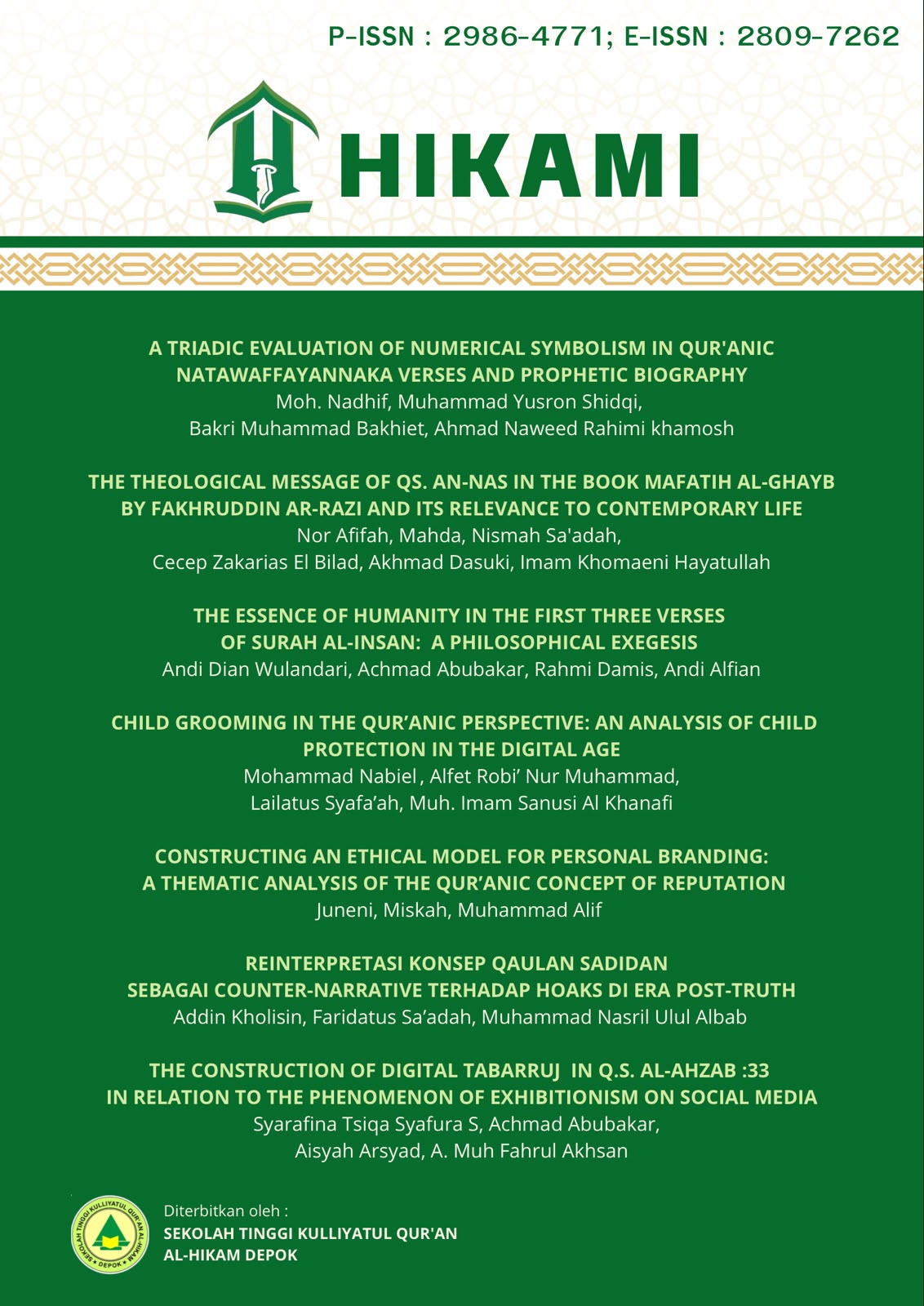
THE ESSENCE OF HUMANITY IN THE FIRST THREE VERSES OF SURAH AL-INSAN: A PHILOSOPHICAL EXEGESIS
Keywords:
Surah Al-Insan, Philosophical Exegesis, Essence of HumanityAbstract
This study departs from the question of how the Qur'an depicts humans not only as biological beings but also as beings with existential, epistemological, and moral dimensions. This study examines the nature of humans in verses 1–3 of surah al-Insan through a philosophical interpretation approach. The research aims to uncover the ontological, epistemological, and moral dimensions of humans in surah al-Insan verses 1–3. The method used is qualitative research with a library research type, employing a philosophical interpretation approach and content analysis techniques on the verses of the Qur'an and relevant Islamic interpretation and philosophy literature. The research results indicate that the essence of humans in surah al-Insan is understood as beings that originate from non-existence, thus being contingent and dependent on God as wajib al-wujud. Humans are also endowed with sensory and intellectual potential as the basis of knowledge, as well as the freedom to choose between gratitude and ingratitude accompanied by moral responsibility. In the view of Surah Al-Insan, humans are seen as beings who have biological existence as well as consciousness, rationality, and moral responsibility. This research contributes to enriching the study of Quranic exegesis through a philosophical approach to comprehensively understanding humanity's nature.
References
Abidin, A. Z., Karinatur, R., & Abidin, A. Z. (2024). Analisis Tematik Kata Al-Insan (Manusia) yang Diiringi dengan Sifat-Sifat Tercela dalam Al-Qur’an. Hamalatul Qur’an: Jurnal Ilmu-Ilmu, 5(2).
Al-Baqi’, M. F. ’Abd. (1945). al-Mu’jam al-Mufahras li Alfaz al-Qur’an al-Karim. Dar al-Hadis.
Al-Hamimy, M. F., & Barlaman, R. B. (2025). Prasyarat Epistemologi dalam Studi Islam?: Sebuah Kajian Konseptual. Journal of Education and Management Studies (JoEMS), 8(4).
Al-Maqaddisi, M. (n.d.). Fath al-Rahman li Talib Ayat al-Qur’an. Dar al-Kutub al-‘Ilmiyyah.
Al-Rasyidin. (2008). Falsafah Pendidikan Islam: Membangun Kerangka Ontologi, Epistemologi, dan Aksiologi Praktik Pendidikan. : Citapustaka Media Perintis.
Al-Razi, F. al-D. M. ibnu ’Umar. (1420). Mafatih al-Ghaib. Daar Ihya? Al- Turats Al-?Arabi.
Al-Syaukani, B. A. (n.d.). Terjemah Tafsir Fathul Qadir.
Aulia, R., Khusnadin, M. H., Fahri, M. R. I., Malintang, J., & Bustomi, Y. I. (2025). Human Nature and Characteristics in the Perspective of Islamic Education: A Review of al-Qur’an and al-Hadith. Jurnal Keislaman, 8(1), 38–50. https://doi.org/10.54298/jk.v8i1.344
Damis, R. (2014). Falsafah Manusia Dalam Al-Qur’an. Sipakalebbi’, 1(2).
Effendi, D. (1984). Keterbatasan, Kebebasan Dan Tanggung Jawab Manusia. Majalah Prisma.
Fajhirah, S., & Kumalasari, D. (2025). The Concept Of Human Nature And Its Challenges In Developing Individual Potential In The Digital Era. Sosioedukasi?: Jurnal Ilmiah Ilmu Pendidikan Dan Sosial, 14(1), 231–239. https://doi.org/10.36526/sosioedukasi.v14i1.5328
Farid, A., Ludiana, N., & Eliqa, P. B. (2023). Manusia dalam alqur’an?: al-basyar, al-ins, Al-Insan. JURNAL ILMIAH RESEARCH STUDENT, 1(2).
Firdaus, S., R., & Saifullah. (2025). Biografi Dan Pemikiran Filsafat Al-Farabi: Filsafat Emanasi, Ketuhanan, Kenabian, Jiwa Dan Akal. Ensiklopedia of Journal, 7(2).
Ghofur, W., Tamam, A. M., & Syafrin, N. (2026). Konsep Manusia dalam Perspektif Barat dan Islam serta Pengaruhnya terhadap Pendidikan Islam. JIIP (Jurnal Ilmiah Ilmu Pendidikan), 9, 3080–3085.
Harahap, A. S. (2021). Epistemologi: Teori, Konsep dan Sumber-Sumber Ilmu dalam Tradisi Islam. Dakwatul Islam, 5(1).
Ibn Faris, A. (1979). Maqayis al-Lughah. Dar al-Fikr.
Jawasun. (1995). Falsafah Ibnu Sina: Wa At Saruhuma Fi Uruwiyah Khilali Alquruni Al Wusto. Darul ‘Ilm.
Muhammad, A. bin. (2004). Tafsir Ibnu Katsir, terj. M Abdul Ghoffar (8th ed.). Pustaka Imam asy-Syafi’i.
Muthmainnah, S., Rama, B., & Mahmud, M. N. (2023). Manusia dan Eksistensinya dalam Pandangan Filsafat Islam. REFERENSI ISLAMIKA: Jurnal Studi Islam, 1(2).
Nasution, H. (1983). Filsafat Agama. Bulan Bintang.
Nuryamin, Damayanti, E., F, H., & Suriyati. (2021). Hakikat Manusia (Perspektif Filsafat Pendidikan Islam). AL-QALAM Jurnal Kajian Islam & Pendidikan, 13(1).
Parlaungan, P., H, D. P., & Dahlan, Z. (2021). Pemikiran Ibnu Sina Dalam Bidang Filsafat. Jurnal Bilqolam Pendidikan Islam, 2(1).
Poerwantara, Ahmad, A., & Rosali, M. . (1994). Seluk Beluk Filsafat Islam. Remaja Rosdakarya.
Qomar, M. (2024). Epistemologi Studi Islam. Madani.
Rahmat, A. (2016). Konsep Manusia Perspektif Filosof Muslim (Studi Komparatif Pemikiran Ibn Sina Dengan Al-Ghazali). Kariman, 04(02).
Rizal, S. (2017). Melacak Terminologi Manusia dalam Al-Quran. At-Tibyan, 2(2).
Saeed, A. (2006). Interpreting the Qur’an?: Towards a Contemporary Approach. The American Journal of Islamic Social Sciences, 24(1), 117–120. https://doi.org/10.35632/ajis.v24i1.1573
Shihab, M. Q. (2002). Tafsir Al-Misbah: Pesan, Kesan dan Keserasian al-Qur’an, Cet. I, Jilid 3. Lentera Hati.
Tanjung, M. (2020). Konsep Manusia Dalam Perspektif Filsafat Pendidikan Islam. An-Nadwah, XXIV(1), 46–63.
Zuhaili, W. (n.d.). Tafsir Al-Munir: Akidah, Syariah dan Manhaj (15th ed.). Gema Insani.
Published
Issue
Section

This work is licensed under a Creative Commons Attribution-ShareAlike 4.0 International License.