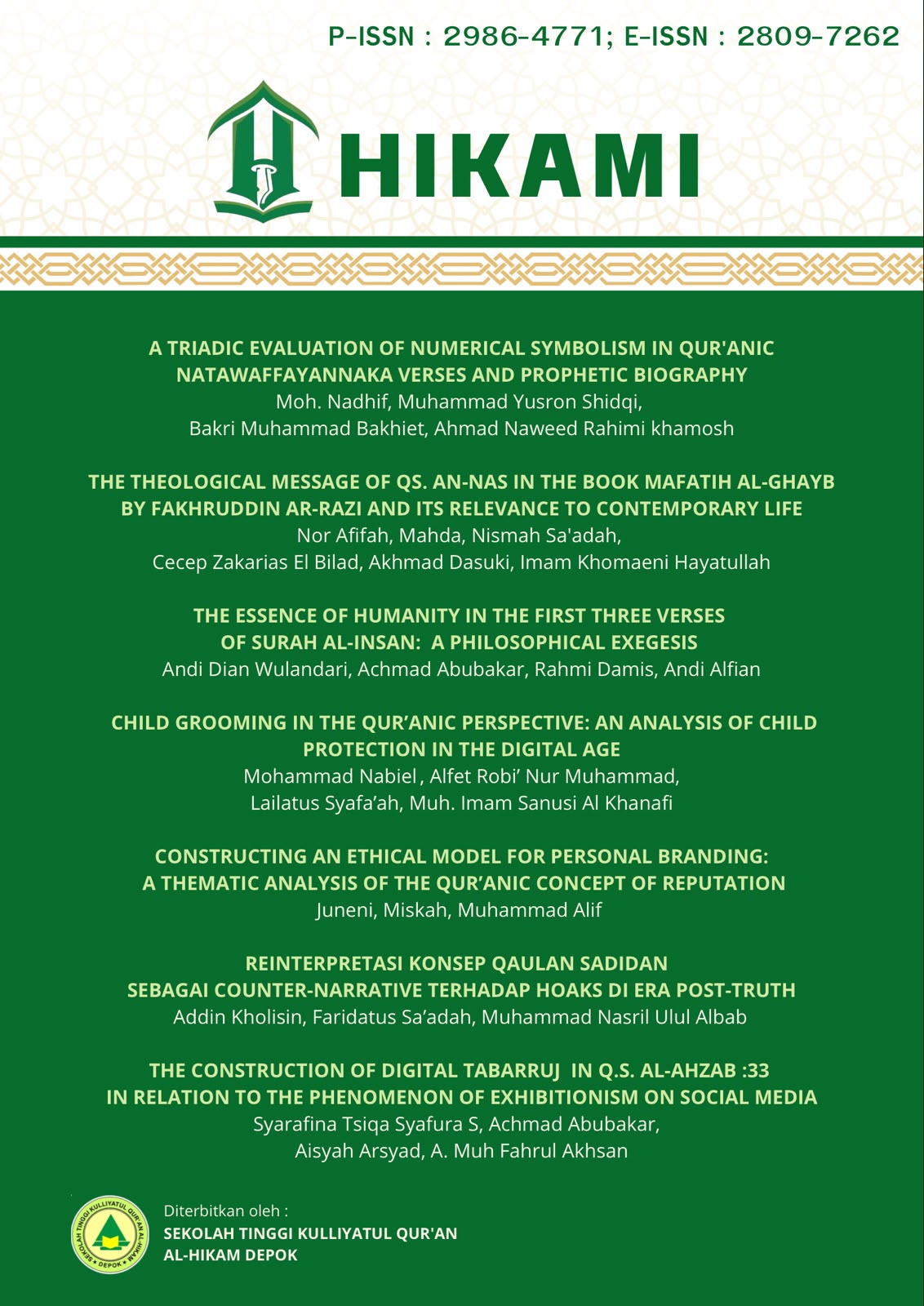
CONSTRUCTING AN ETHICAL MODEL FOR PERSONAL BRANDING: A THEMATIC ANALYSIS OF THE QUR’ANIC CONCEPT OF REPUTATION
Keywords:
ethical personal, digital personal branding, structured thematic analysisAbstract
The emergence of modern digital self-imaging (the phenomenon of digital personal branding) is generally framed within a secular-pragmatic paradigm that views reputation primarily as the simulated management of one’s image in pursuit of cyber metrics. This study aims to deconstruct this model by developing a new theory of reputation based on sacred texts through a thematic analysis of verses from the Qur'an. This study employs an exploratory descriptive qualitative approach using a systematic content analysis design that examines a corpus of 23 Qur’anic verses obtained from the analyzed manuscripts and processed through three rounds of qualitative coding (open, axial, and selective coding). The results reveal the formation of a Transcendental Ethical Reputation Model based on authenticity, namely the alignment between verbal expression and reality in actual behavior (Q.S. Ash-Shaff: 2–3). Based on the analysis, four typologies of approach styles were identified: Spiritual Branding (Q.S. Fatir: 10), Humility-Based Branding (Q.S. Al-Furqan: 63), Gentle Power (Q.S. Ali Imran: 159), and Claim to Authority based on Respect (Q.S. Al-Hajj: 30). This model is reinforced by the triadic persuasive communication method (Q.S. An-Nahl: 125) in conjunction with (Q.S. At-Taubah: 105) to build social proof and affirm superiority (Q.S. Al-Qashash: 26). Theoretically, this model represents a radical improvement upon Erving Goffman’s theory of impression management while simultaneously complementing and offering a theocentric (ahsan taqwim) alternative paradigm to Abraham Maslow’s theory of self-actualization (Q.S. At-Tin: 4) and Albert Bandura’s description of self-efficacy (Q.S. Ali Imran: 139), which has implications for the resilience of an individual’s psychological dignity (Q.S. Al-Baqarah: 273).
References
Ahmad Anif Syaifudin, & Sutinnarto. (2023). Building personal branding and public speaking skills for youth future career development. 2(2), 127–135.
Anandya, I. A., Saputri, S. Z., Handani, H. R., et al. (n.d.). The importance of building personal branding on social media (pp. 1–6).
Dinilhaq, R. (2024). Lexical semantic analysis of Al-Zamakhsyari on the phrase “personal branding” Prophet Musa (AS) in Al-Qur’an. 20(2), 247–273.
Dyah, S., Kurniawati, & Masnita, Y. (2024). Experiences to brand loyalty: The role of authenticity values in the transition to experience to brand loyalty. Syntax Literate: Indonesian Scientific Journal, 9(1).
Fatih, M. (2022). The concept of the compatibility of the Qur’an in the Tafsir Mafatihul Ghaib by Fakhruddin Ar-Razi: The perspective of reasonable knowledge. Progress, 6.
Hanif, T. H., Ghani, M., Haq, H., Hussain, M., & Fauziah, K. (2023). Trustco Persada’s reputation management towards consumers. Mamen, 2(4), 503–508. https://doi.org/10.55123/mamen.v2i4.1504
Ishari, N. (2025). Spiritual personal branding: The integration of transcendent values in the construction of identity in the digital age. (1), 21–30.
Juneni. (2026). Ethical model of personal branding: A structured thematic analysis of conceptual reputation sentences in the Qur’an [E-book].
Martha, A. E. (2024). Cyberbullying through Instagram social media in the theory of the space transition of cybercrimes. Ius Quia Iustum Legal Journal, 31, 199–218.
Minarni, Ahmad, L. O. I., & Ali, M. (2023). The concept of self-efficacy in the perspective of hadith. Journal of Islamic Discourse, 11(3), 371–387.
Mokos, I. E., & Salehudin. (2025). The construction of adolescent self-identity in social media: An analysis of Erving Goffman’s dramaturgical concepts. MUKASI: Journal of Communication Sciences, 4(3), 638–649. https://doi.org/10.54259/mukasi.v4i3.4690
MS, H. S., & Gumilar, M. S. (2025). Self-actualization according to the perspective of Western psychology and the perspective of Sufism. Nusantara Scientific Journal, 2(5), 930–940.
Muhammad, H. N., Setiawan, A., & Nietarahmani, R. P. (2024). The water cycle in QS. Ar-Ra’d verse 17 according to Jawahir fi Tafsir Al-Qur’an Al-Kareem. Al-Muhafidz: Journal of Qur’an Science and Tafsir, 4(1), 137–152. https://doi.org/10.57163/almuhafidz.v4i1.98
Nisa, P. K., & Az’zahra, N. (n.d.). Media constellation in the digital age: Hierarchy, public opinion, and gender dialectics.
Parawansah, K. I. (2026). Understanding social communication: Front stage and back stage according to Goffman’s dramaturgy theory. Al-Qolamuna: Journal of Islamic Communication and Broadcasting, 3(1), 125–139.
Susilawati, S., & Asbari, M. (2023). Personal branding: Between money and name. Literacy: Journal of Education Management, 1(1), 50–54.
Ulinnuha, M. W. (2025). Personal branding in the perspective of the Qur’an: Analysis with the approach of ma‘n? cum maghz?. 5.
Umam, K., & Yazidurrahma, A. (2024). Islamization of Abraham Maslow’s theory of needs. 9(1), 1–13.
Published
Issue
Section

This work is licensed under a Creative Commons Attribution-ShareAlike 4.0 International License.